
 Design Creative Lab
Packaging is the salesperson standing on the shelf when you are not there. In a few seconds it has to say what the product is, which brand it belongs to and why it is worth taking home.
I have been designing brands since 1994 and have taken packaging from the first idea to the final artwork for the printer. Here is what product packaging should include, the types that exist and how to work on it step by step.
What is packaging design?
Packaging design is creating the shape, material and look of the wrapper that protects, presents and sells a product. It brings together three jobs: structural (shape, size, how it opens), graphic (brand, colors, copy, illustration) and technical (material, printing and finishes).
Good packaging looks good, and it also protects the product, is understood quickly and can be produced within your budget.
What is the difference between primary, secondary and tertiary packaging?
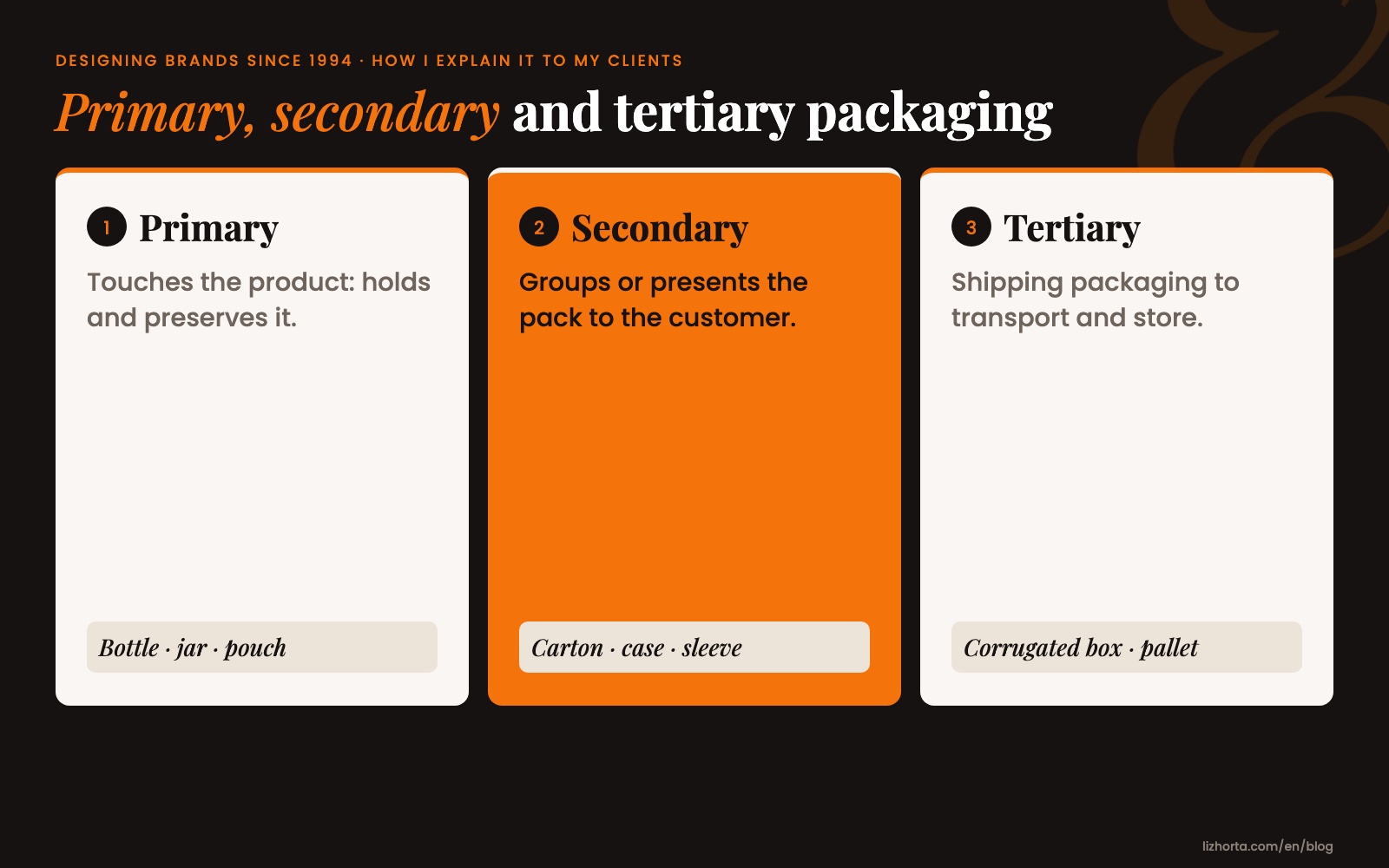
- Primary packaging: in direct contact with the product. The bottle, the jar, the pouch.
- Secondary packaging: groups or presents the primary pack. The perfume's carton, the case, the sleeve.
- Tertiary packaging (shipping): used to transport and store many units. The corrugated box, the pallet, the stretch wrap.
In everyday language we say "packaging" for almost everything. When designing, it helps to separate them, because each one does a different job.
What should product packaging include?
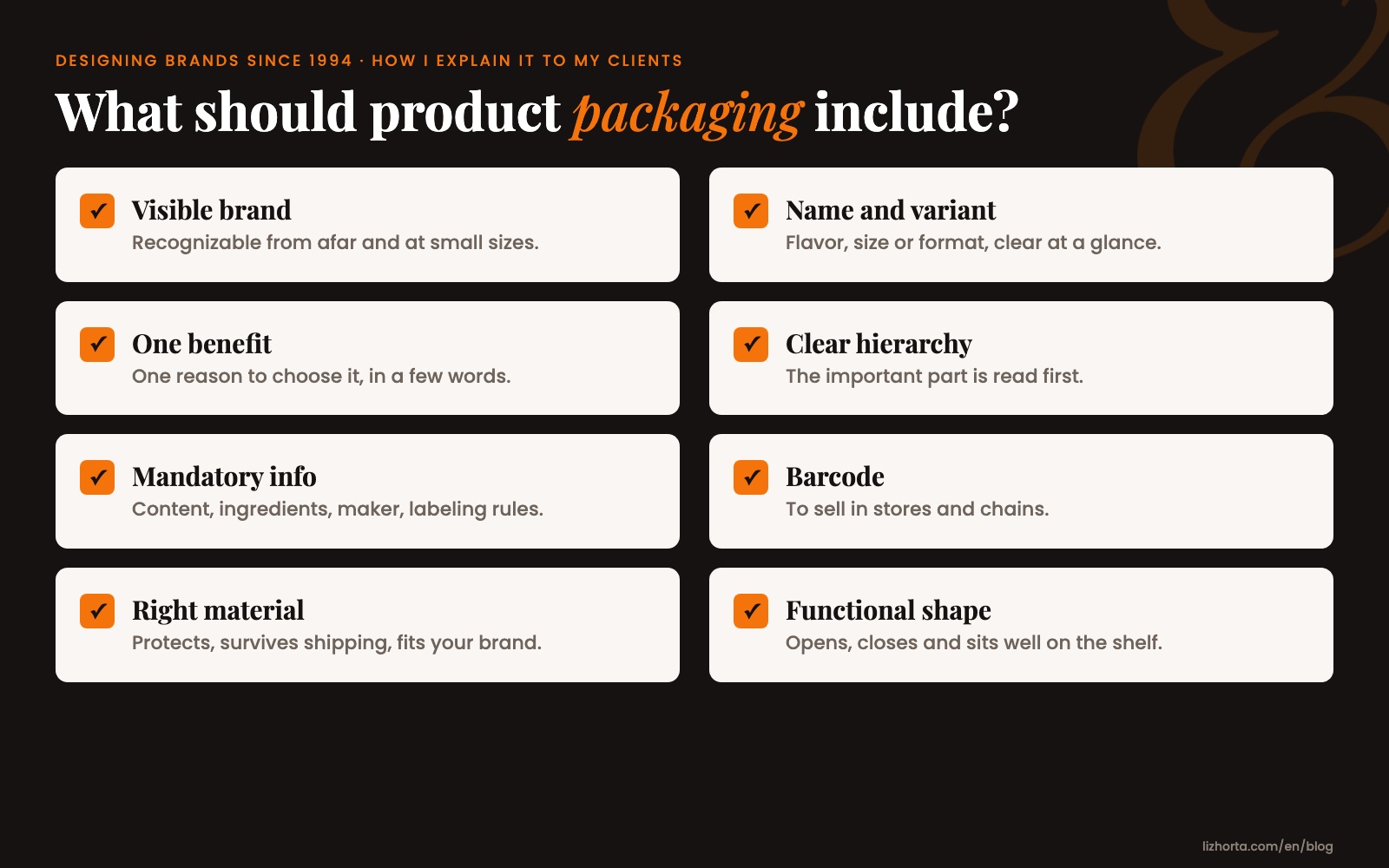
- A visible brand. The logo is recognizable from a distance and at a small size.
- The product name and variant. Flavor, scent, size or format, clear at first glance.
- One main benefit. A single reason to choose it, in a few words.
- Clear hierarchy. The most important thing is read first; supporting details come after.
- Mandatory information. Net content, ingredients, manufacturer details, instructions or warnings, depending on your product.
- A barcode. Essential if you plan to sell in stores or chains.
- The right material. It protects the product, survives shipping and matches your brand's values.
- A functional shape. It opens, closes, sits on the shelf and travels easily.
On mandatory information: every country and product category has its own labeling rules (in Mexico, for example, NOM-051 covers food and non-alcoholic beverages). Check which ones apply with your supplier or a specialist before printing.
How do you design product packaging, step by step?
- Know where it will be sold. Shelf, online store, market stall or gift. Each place asks for something different.
- Look at your competitors. Take photos of the shelf and look for ways to stand out.
- Define the hierarchy. Decide what is read first, second and third.
- Choose format and material. With your supplier, review dimensions, die-cut, type of board or plastic and finishes.
- Design and build a mock-up. A full-size assembled prototype to see, touch and test.
- Prepare the final artwork. Files with exact dimensions, print-ready colors and an approved color proof before the print run.
What does well-designed packaging look like?
Here is a case from my portfolio: for Guerlain I designed the special packaging for the Abeille Royale Double R serum. It is a hexagonal box inspired by the honeycomb, with a gold lid, a base for the treatment and an insert with the product information. We took it from proposal and mock-up to final artwork for production.
What works in that kind of project is that the shape tells the brand's story before you read a single word. I have also designed seasonal packaging, such as Sears' Christmas box.
How do you make attractive packaging for a small business?
You don't need a custom box to get started. These work very well:
- A standard container with your own label. Stock jars, pouches or boxes with a well-designed label.
- A brand seal or sticker. It closes plain bags and boxes and makes them yours.
- A card or insert. A thank-you note, instructions or your story in a few lines.
- A consistent identity. The same colors and fonts everywhere, so your brand is recognized.
When your product grows, you will already have a clear base to move to custom packaging. If you don't have a logo or palette yet, start there: How to Choose Your Brand Colors
What are some famous packaging examples?
- The Coca-Cola bottle. In 1915 the company asked for a bottle people could recognize by touch, in the dark, and even broken. That is how the contour bottle was born. Read the history of the bottle
- Toblerone. Since 1908 its triangular prism shape has been part of the brand: you recognize the product just by seeing the box. Read the history of Toblerone
- Tiffany's blue box. The color was born on the cover of its 1845 catalog and today the little blue box is as iconic as the jewelry inside. Read the history of Tiffany Blue
All three use their own shape or color consistently, and that is why they are recognized without reading the name.