
 Design Creative Lab
Your name is the first thing people say, write and search for about your brand. A good logo helps people recognize it; a good name lets people recommend you without mistakes and find you on the first try.
I have been designing brands since 1994, and in many projects the work starts before the logo: with the name. Here is how I approach it, with examples and my own brands.
What is brand naming?
Brand naming is the process of creating and choosing the name of a brand, company, product or service. It is not about sounding nice: the name has to say something about you, set you apart from competitors, be registrable and work everywhere you will appear, from your web domain to a phone call.
In marketing and graphic design, naming is part of a brand's verbal identity, just as the logo is part of its visual identity.
What types of brand names are there?
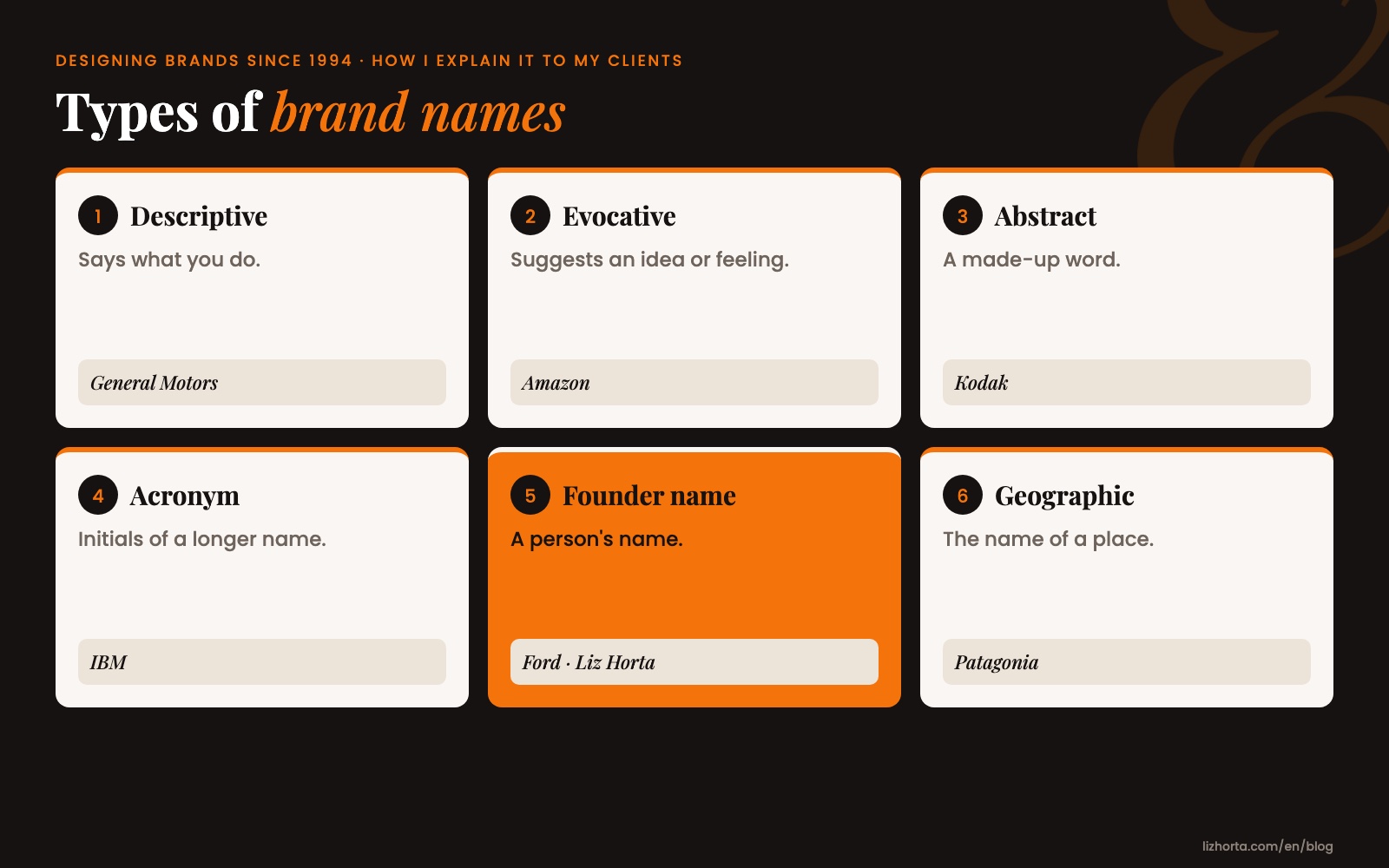
- Descriptive. Says what you do. Clear, but harder to register and differentiate. Example: General Motors.
- Evocative or suggestive. Suggests an idea or a feeling without describing the service. Example: Amazon, which evokes something huge.
- Abstract or invented. A made-up word with no prior meaning. Very distinctive, but it takes time to fill with meaning. Example: Kodak.
- Acronym. Initials of a longer name. Short, but harder to give personality. Example: IBM.
- Founder or personal name. Uses a person's name. Works very well for personal brands and professional firms. Example: Ford.
- Geographic. Takes the name of a place. Example: Patagonia.
Many brands combine two types. Mine, Liz Horta • Design Creative Lab, uses my own name plus a descriptive line that says what I do.
What is the brand naming process, step by step?
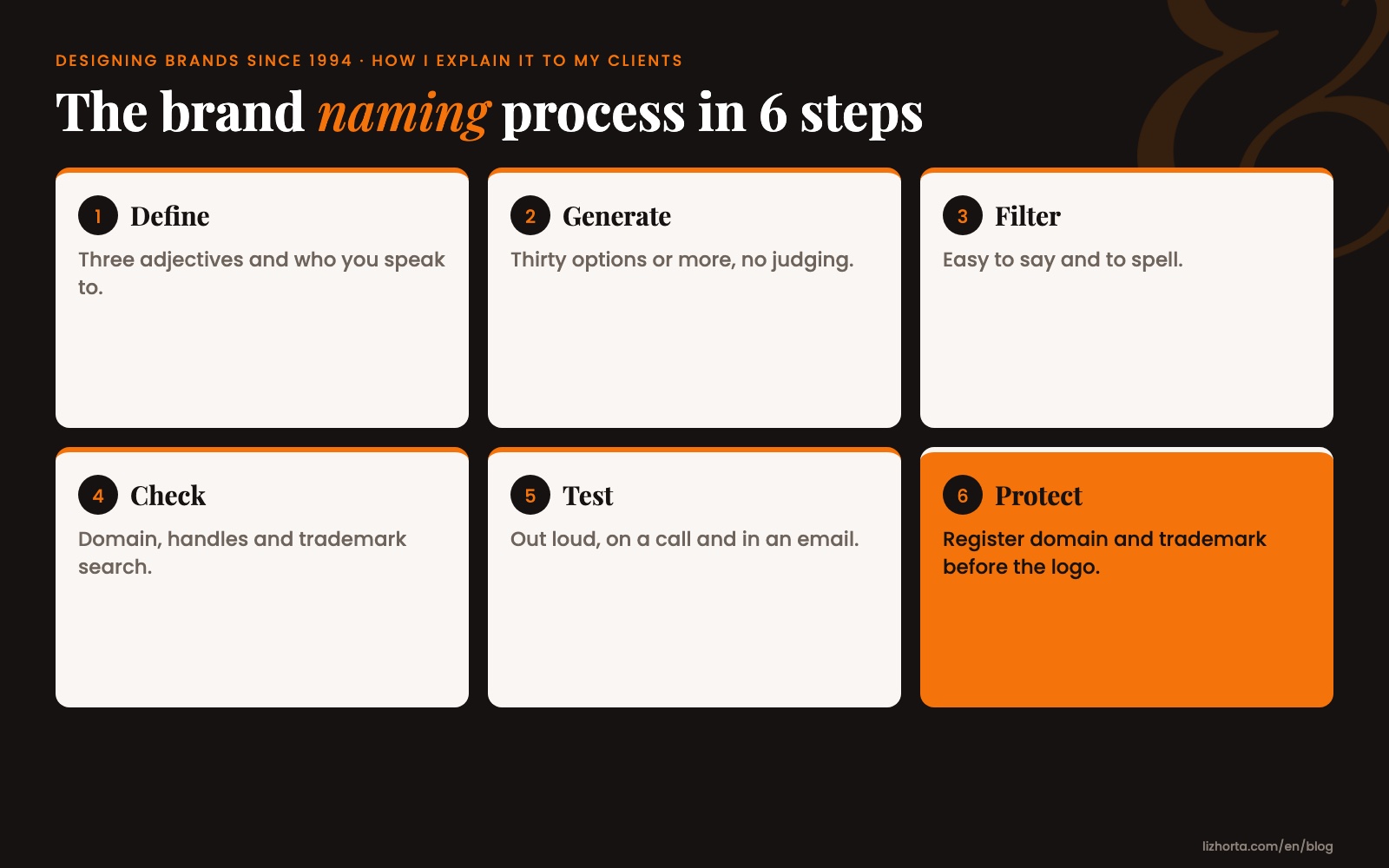
- Define what you want to convey. Three adjectives for your brand and who you are talking to.
- Generate lots of options. At least thirty, across different naming types, without judging them yet.
- Filter for practicality. Easy to say, spelled the way it sounds and not confusable with another brand.
- Check availability. Web domain, social media handles and a trademark search in your country (in Mexico, IMPI's MARCia tool).
- Say it out loud. Say it on a call, write it in an email and ask someone who does not know you how they would spell it.
- Choose and protect it. Register the domain and the trademark before investing in a logo and print.
How do you choose a brand name for your business?
A good name passes this filter:
- Easy to say and spelled the way it sounds. If you have to spell it out every time, you will lose referrals.
- Short and memorable. Two or three syllables per word help a lot.
- Has an available domain, ideally the same as the name.
- Does not resemble a registered trademark in your category.
- Works in other languages, if you plan to sell abroad.
- Leaves room to grow. A name that is too literal ("Ana's Chocolate Cakes") ties you down if you expand your services tomorrow.
One of my own examples: when we named P&P Consultora en IA, we made sure the name matched its domain, consultoraenia.com. That way anyone who hears the name can type the address without searching for it.
How do you choose a name for your personal brand?
For a personal brand, the strongest option is usually your own name, because your reputation is already tied to it and nobody else can use it the same way. If your name is very common or hard to spell, add a descriptive line, as I did with "Design Creative Lab", or use a short version your clients already use.
I explain the rest of the process in How to build a personal brand step by step
What are some famous brand naming examples?
- Kodak. George Eastman invented the word because he liked the letter K, which he found strong and incisive, and wanted a short name that meant nothing in any language. Read Kodak's history
- Amazon. Jeff Bezos chose the name of the largest river in the world to suggest a store of enormous size. Read Amazon's history)
- Google. It comes from "googol", the number 1 followed by a hundred zeros, an idea of the huge amount of information they wanted to organize. Read Google's history
Once you have a name, the next step is giving it shape: I explain the types of logos in Types of logos: wordmark, symbol, combination mark and emblem