
 Design Creative Lab
A book, a magazine, a catalog or a company's annual report can carry the same text and read in very different ways. The difference is editorial design: how the information is organized so people want to read it and understand it the first time.
I have been doing editorial design since 1994: book series for international organizations, luxury catalogs, management reports and Spanish adaptations of fashion brand publications. Here is what it is, what it is for and how the work gets done.
What is editorial design?
Editorial design is the branch of graphic design that organizes text and images in publications, printed or digital, so they are easy to read and convey the personality of whoever publishes them. It includes layout (where everything goes), typeface choice, heading hierarchy, the treatment of photos and charts, and preparing the files for print or screen.
Good editorial design is almost invisible: the reader moves forward effortlessly and remembers what matters.
What is editorial design for?
- It makes reading easier. It breaks content into clear blocks and guides the eye.
- It organizes information. It separates main from secondary with size, color and space.
- It communicates the brand. A publication in your company's typeface and palette reinforces your identity on every page.
- It builds credibility. A well-designed report feels more serious and trustworthy than the same text in Word.
What is editorial design used for in a company?
In a company, editorial design shows up in more places than you might think:
- Annual or management reports for partners, boards and regulators.
- Catalogs and brochures for products or services.
- Magazines and newsletters, internal or for clients.
- Presentations and sales proposals structured as documents.
- Manuals: brand guidelines, procedures or onboarding.
- Institutional books for anniversaries or research.
An example of my own: I designed a 97-page biennial report for an international affairs council, with timelines of its publications, partnership maps and a photo memoir. The challenge was not to "make it pretty", but to let readers move through twenty years of work in minutes.
What are the elements of editorial design?
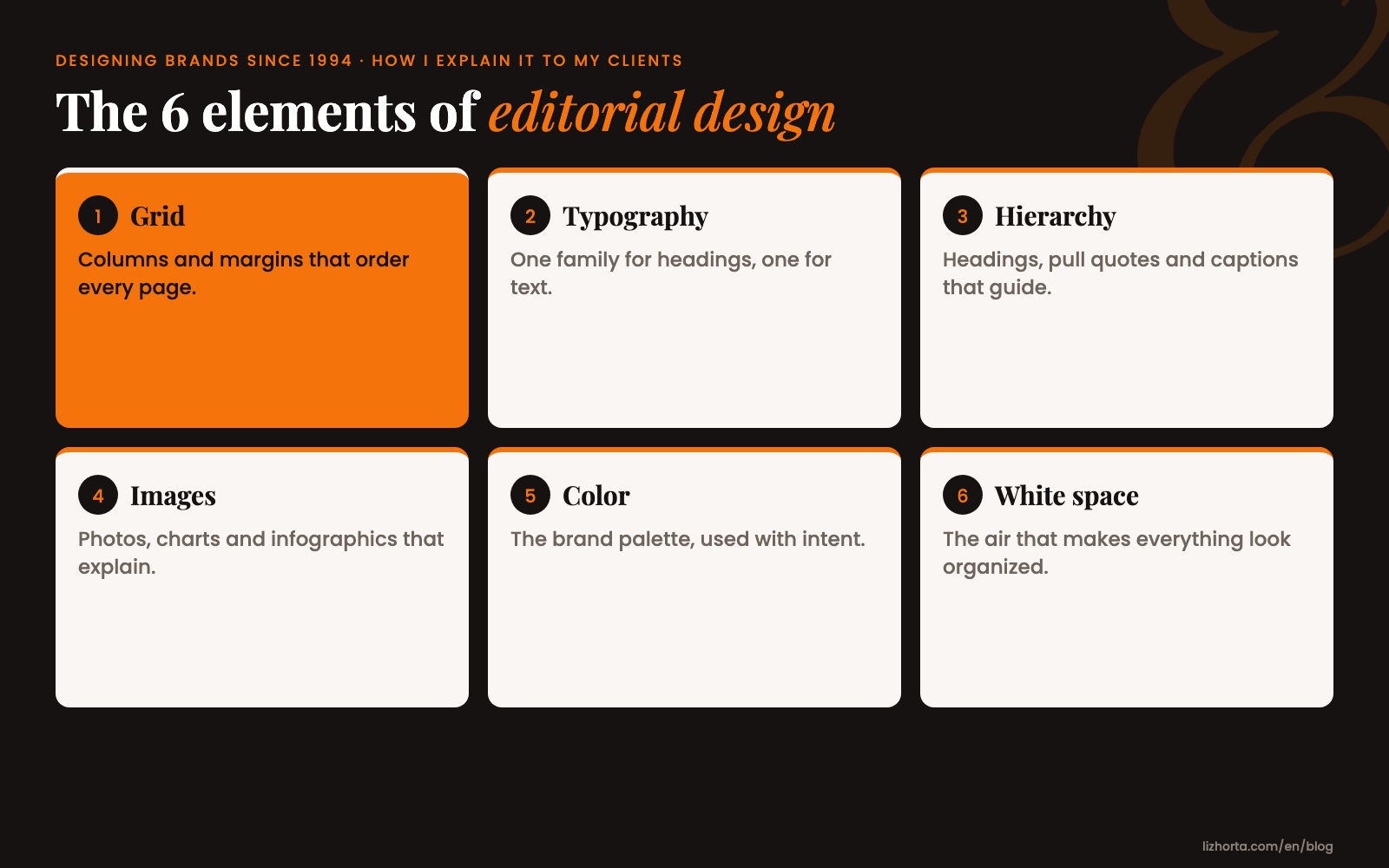
- Grid. The invisible structure of columns and margins that keeps every page in order.
- Typography. One family for headings and another for body text, at comfortable sizes and line spacing.
- Hierarchy. Headings, subheadings, pull quotes and captions that tell you what to read first.
- Images. Photos, illustrations, infographics and charts that explain or give the eye a rest.
- Color. The brand palette applied with intent, not in every corner.
- White space. The air between blocks that makes everything look organized.
What types of editorial design are there?
- Books: novels, essays, technical and institutional books.
- Magazines: covers, regular sections and lots of visual variety.
- Newspapers: many-column grids and a very strong hierarchy.
- Catalogs and brochures: built to show products and sell.
- Reports and yearbooks: data, charts and institutional messages.
- Digital editorial: interactive magazines, navigable PDFs, newsletters and e-books.
When adapting international publications into Spanish, for instance, the challenge is different: keep the original grid and style while the Spanish text, which usually runs longer, fits without breaking the design.
What does the editorial design process look like?
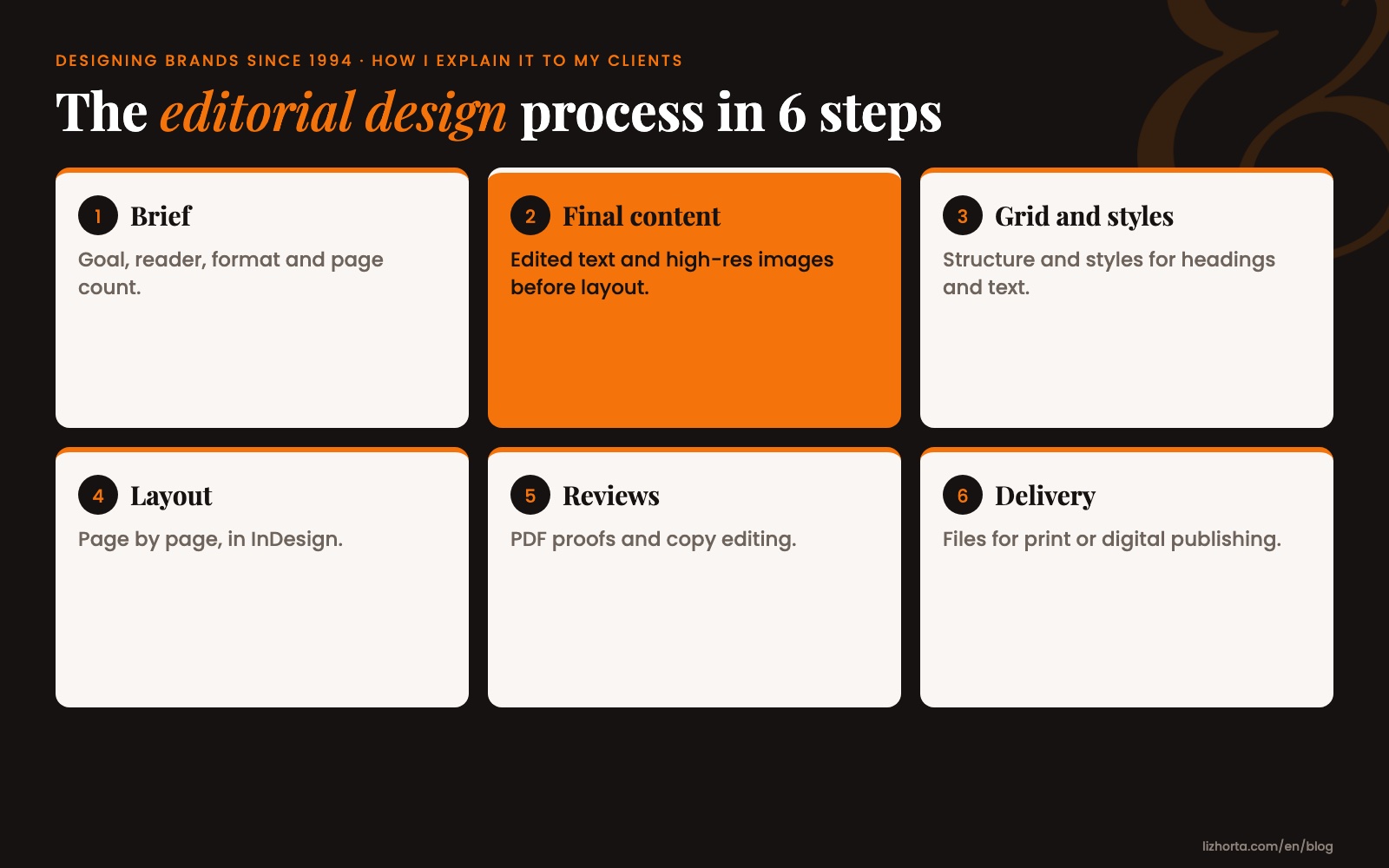
- Brief. Goal, reader, format, page count and whether it is printed, digital or both.
- Final content. Edited text and high-resolution images before layout starts.
- Grid and styles. Define the structure and the styles for headings, body text and captions.
- Layout. Place all the content page by page (I work in InDesign).
- Reviews. PDF proofs for the client and copy editing.
- Delivery. Print-ready files (with bleed and color profiles) or files for digital publishing.
The step that saves the most time is the second one: laying out text that is still changing is the number one cause of delays.
What are some famous editorial design examples?
- Penguin Books. Its three-band color covers (1935) and the typographic rules Jan Tschichold gave them in the late 1940s turned a series of cheap paperbacks into a system you recognize at a glance. See the history of Penguin Books
- The US National Park Service Unigrid. In 1977 Massimo Vignelli designed a single grid for every park brochure, still in use today. See Massimo Vignelli
- Josef Müller-Brockmann. His book on grid systems is still the foundation of modern editorial design. See Josef Müller-Brockmann
If your publication also needs to put your company's identity in order, this may help: What should a brand identity manual include?
Want your report, catalog or book to read easily and look like your brand?
CTA.
Frequently asked questions about editorial design
What is editorial design in a nutshell?
It is the design of publications: organizing text and images in books, magazines, catalogs or reports so they are easy to read and convey the identity of whoever publishes them.
What are the elements of editorial design?
Grid, typography, hierarchy, images, color and white space.
What types of editorial design are there?
Books, magazines, newspapers, catalogs and brochures, reports and yearbooks, and digital editorial (interactive PDFs, newsletters and e-books).
What is editorial design used for in a company?
To make its reports, catalogs, newsletters and proposals easy to read, professional-looking and consistent with the brand on every page.
What software is used for editorial design?
The professional standard is Adobe InDesign, because it handles grids, styles and long documents, and prepares files for print.
Notes for Liz (not in the post)
- Same content as the Spanish version.