
 Design Creative Lab
Typography is the voice of your logo. Before anyone reads your name, the shape of the letters has already told them whether you are an elegant, friendly, tech-savvy or playful brand. That is why it is one of the decisions I care about most when I design an identity.
I have been designing logos since 1994, and here is how I choose the font, with my own brand as the example.
What font should you use for a logo?
The best font for your logo is the one that communicates your brand's personality and reads well at any size: from a billboard to your profile icon on a phone. First decide what you want to convey, then look for the type family that says it.
What are the types of fonts for logos?
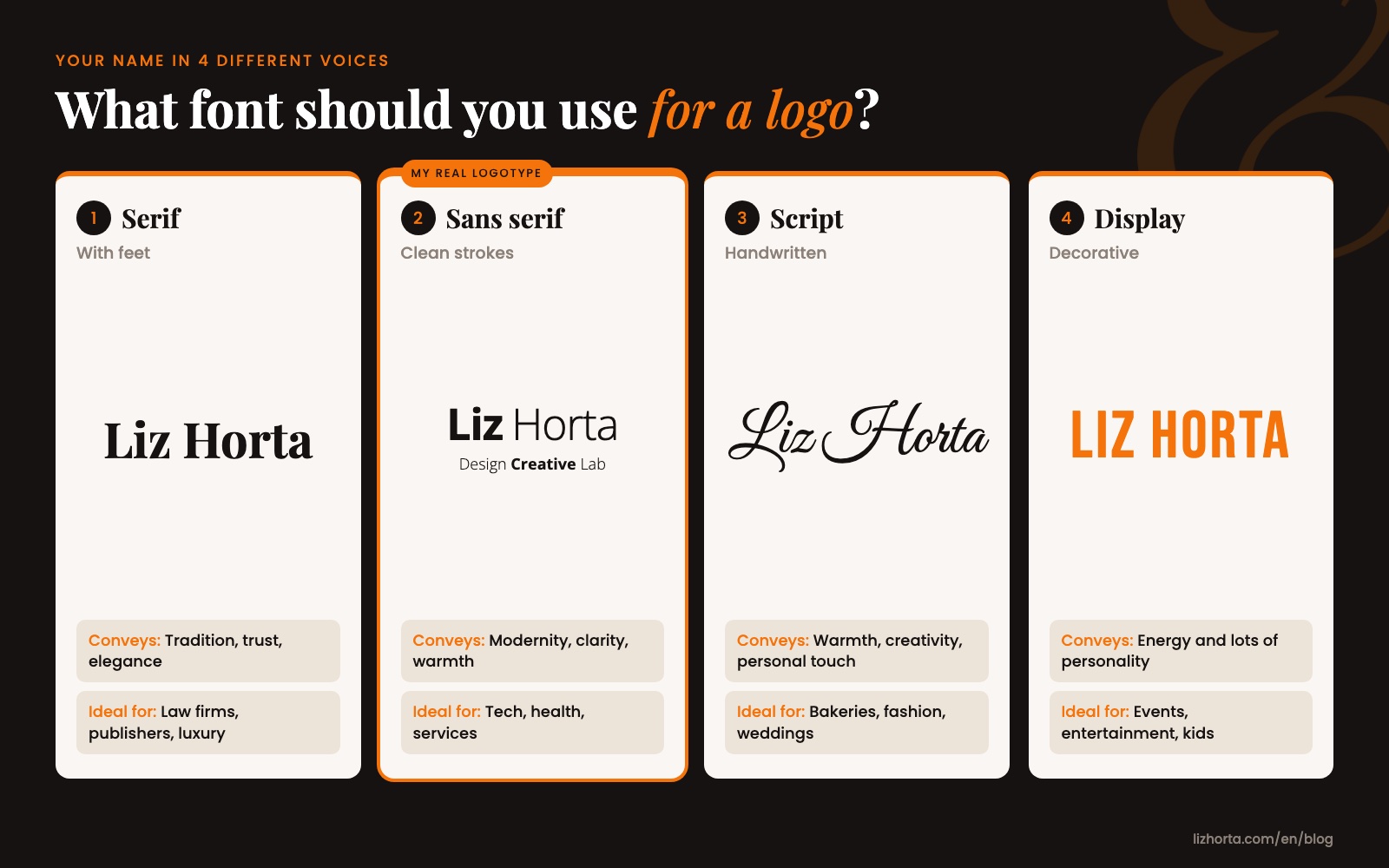
- Serif. Letters with small "feet" at the ends. They convey tradition, trust and elegance. Common in law firms, publishers and luxury brands.
- Sans serif. Clean letters with no feet. They convey modernity, clarity and approachability. Favorites in tech, health and services.
- Script. They imitate handwriting. They convey warmth, creativity and a personal touch. They work for bakeries, fashion, weddings and personal brands.
- Display. Letters with lots of personality, made for headlines. They work for entertainment, kids' or event brands, used on short words.
What font should you use for an elegant logo?
For an elegant logo, high-contrast serifs (thick and thin strokes) such as Didot- or Bodoni-style faces work beautifully, as do fine scripts with loose strokes. Give them room: plenty of space around and between the letters reads as luxury.
What font should you use for a modern or minimalist logo?
Geometric or humanist sans serifs are the safe bet: Montserrat, Poppins, Open Sans or Futura, for example. Play with weight (bold and light) instead of adding ornaments. That contrast in weights adds personality with very few elements.
How many fonts should a logo have?
One or two at most. The most common setup is a single family in two weights (for example, bold and light) or a pair of contrasting families: one with personality for the name and a simple one for the tagline.
My own logotype uses a single family: "Liz Horta" is set in Open Sans Bold and Light, and below it "Design Creative Lab" in Open Sans Light with "Creative" in Bold. The contrast in weights does the work, and it reads just as well on a business card as on a screen.
How do you choose a font for a logo, step by step?
- Define three adjectives for your brand. Are you warm, professional, playful, premium?
- Pick the family that conveys them (serif, sans serif, script or display).
- Write your real name in five options. Letters behave differently with every word.
- Test it small. Print your logo at 2 cm (under an inch) and look at it on your phone: it should read effortlessly.
- Check the license. Make sure you can use it commercially.
- Adjust the letters by hand. Letter spacing (kerning) and custom details are what make a logotype unique.
If you are still unsure which kind of logo suits you, I explain the differences in Types of Logos: Wordmark, Symbol, Combination Mark, Emblem
Can you use a free font for your logo?
Yes, as long as its license allows commercial use. Google Fonts typefaces come with open licenses that allow their use in logos and commercial products. On download sites like DaFont, many fonts are for personal use only: check each license or buy the commercial version.
A good tip: a free font that is well adjusted (with corrected spacing and a custom detail) looks just as professional as a paid one.
What fonts do famous brands use?
- Google. In 2015 it switched its logo from a serif typeface to its own geometric sans serif, designed to look clear on any screen. See the history of the Google logo
- Coca-Cola. Its logotype is written in Spencerian script, a calligraphy style widely used in the 19th century, and the brand has kept it ever since as part of its identity. See the history of the Coca-Cola logo
- Vogue. It uses a high-contrast Didot-style serif, the classic reference for editorial elegance. See the Didot typeface)
Color goes hand in hand with typography; I explain how to choose it in How Do I Choose My Brand Colors?