
 Design Creative Lab
When I deliver a brand, the question I hear most is: "How do I explain this to my team and my suppliers?" The answer lies in two documents that are often confused: the brand book and the brand guidelines manual.
I have been designing brands since 1994. Here is what each one is, what goes in it and which one your company needs.
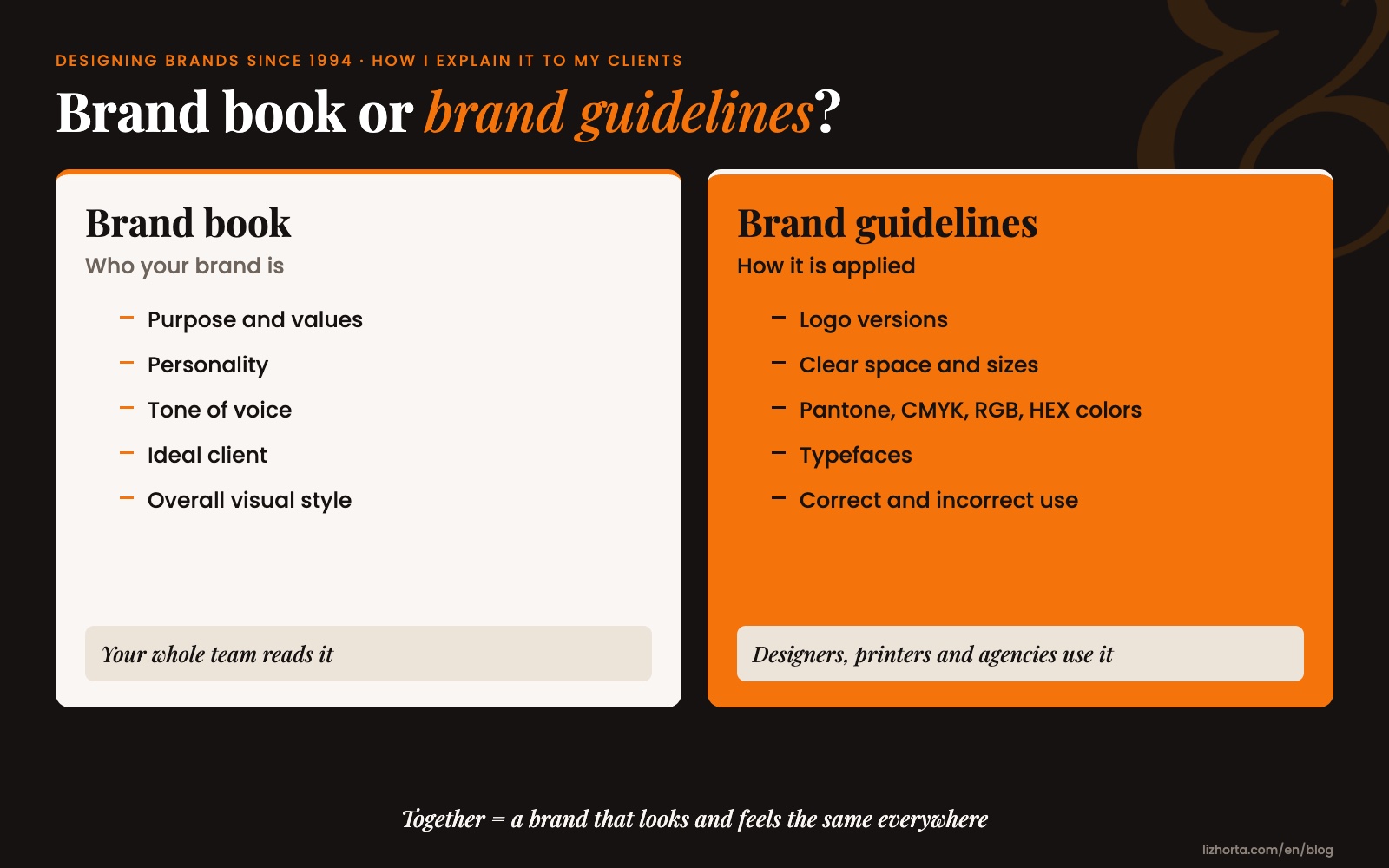
What is a brand book?
A brand book tells who your brand is: its purpose, values, personality, how it speaks and how it looks. It is the guide that lets anyone who works with your brand understand and represent it well, even if they have never talked to you.
Think of it as your brand's introduction: it explains the why behind every decision.
What are brand guidelines?
Brand guidelines, or a corporate identity manual, are the technical rules of use: logo versions, clear space, minimum sizes, exact colors (Pantone, CMYK, RGB and HEX), typefaces and applications on stationery, social media or signage. I cover everything it should include in What should a brand identity manual include?
It is the document your designer, printer or agency uses so the brand looks the same everywhere.
What is the difference between a brand book and brand guidelines?
- The brand book explains who you are. Essence, purpose, values, personality, tone of voice and overall visual style.
- The guidelines explain how it is applied. Technical rules for the logo, colors, typefaces and examples of correct and incorrect use.
- Your whole team reads the brand book. Sales, customer service, social media and new hires.
- The people who produce use the guidelines. Designers, printers, agencies and suppliers.
In practice, many companies combine them into one document with two parts. What matters is having both: the essence and the rules.
What should a brand book include?
- Story and purpose: why your brand exists.
- Mission, vision and values.
- Who you speak to: your ideal client.
- Brand personality: what your brand would be like as a person.
- Tone of voice: how you write and how you don't, with examples.
- Visual style: logo, color palette, typefaces and photography style, with the essentials to recognize them.
- Applied examples: how your brand looks on social media, stationery or your website.
If you are still choosing colors, read How do you choose your brand colors?
What is a mini brand book?
A short version of the brand book, 5 to 10 pages, with the essentials: logo and its versions, colors, typefaces, tone of voice and two or three application examples. It is ideal for entrepreneurs, professionals and small businesses that need order without an 80-page document.
Does my company need a brand book?
You should have one if:
- Several people post or design on behalf of your brand.
- You work with different suppliers (printer, agency, community manager).
- Your team is growing and everyone explains the brand their own way.
- You just rebranded and need everyone to use the new identity. I explain how in What is rebranding and when should you rebrand?
Which brands have famous brand books?
- NASA (1975). Its Graphics Standards Manual for the logo known as "the worm" became a design classic; in 2015 a Kickstarter campaign funded its reissue as a book. Read about the NASA insignia
- Mailchimp. Publishes its content style guide online, with its voice and tone, so anyone can write like the brand. See Mailchimp's style guide
- Uber. Has a public site with its brand guidelines: logo, color, typography, photography and illustration. See Uber's brand guidelines